
Your ads.txt says one thing. The exchange's sellers.json says another.
Publishers declare who may sell their inventory. Exchanges declare who their publishers are. Nobody checks whether the two agree — so we built something that does.
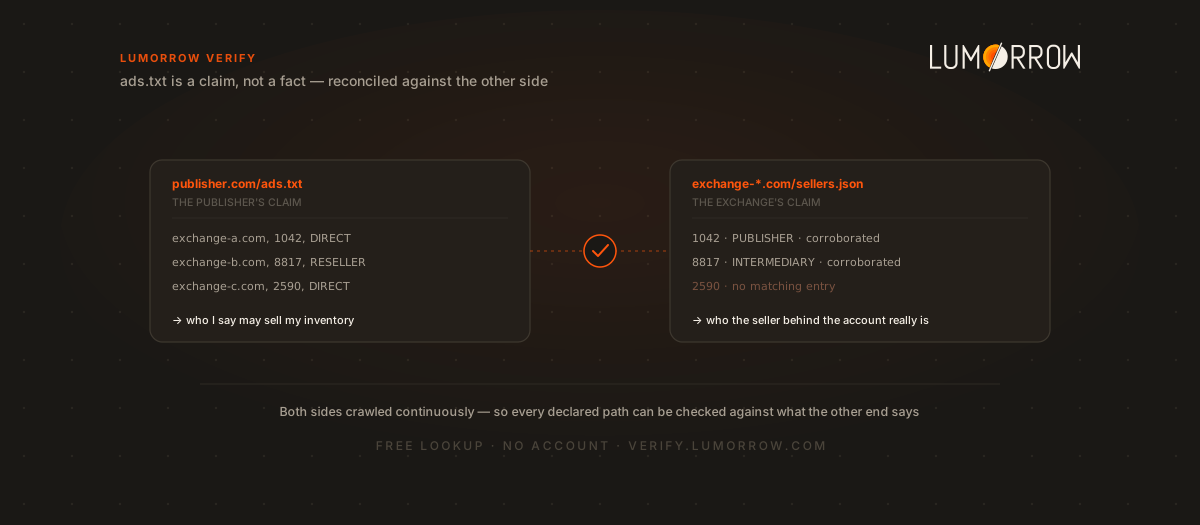
Open any publisher’s ads.txt and you will find a list of companies authorised to sell that site’s inventory. Open the sellers.json of any exchange on that list and you will find its own list of the publishers it represents.
The two files describe the same relationships from opposite ends. In a healthy supply chain they agree. Nothing in the ecosystem checks whether they do.
That gap is what Lumorrow Verify closes. We crawl both sides of the market continuously — more than 500,000 domains, over 25 million ads.txt records — and reconcile each publisher’s declared sellers against what those sellers independently say about themselves.
ads.txt is a claim, not a fact
That distinction is the whole product. A line in an ads.txt file is an assertion made by one party, published on their own server, with nothing behind it. It becomes checkable only when you can hold it against the matching assertion from the other end of the relationship — the exchange’s sellers.json entry for that same account.
Turning claims into something checkable is the job. Everything else follows from it.
What turns up
Rarely anything as dramatic as fraud. Mostly it is drift. A reseller added for a campaign in 2021 and never removed. A DIRECT line whose account id belongs to a different publisher’s account. The same account declared DIRECT in one line and RESELLER three lines down. A file last edited by someone who has since left.
None of it is malicious. All of it looks identical to spoofing from the buy side, because a buyer cannot see intent — only whether the two declarations line up. So the path gets discounted, or the bid gets skipped. The publisher sees softer demand and never finds out why.
What you can do with it right now, free
Look up any domain. No account. Type in a publisher or an exchange and see the authorised sellers, the resellers sitting in between, and what has changed recently. Try it on an exchange you already buy through — pubmatic.com is a good place to start.
Validate a supply chain. Paste the SupplyChain object out of any bid request into the validator and every hop is resolved against what that exchange actually declares.
Paid plans add continuous monitoring, alerts when a relationship changes, the full per-line report, CSV export and an API — from $49 a month. Crawl freshness is identical on every plan, including the free one. Plans decide how much you watch, never how current the data is.